
Hearing Aids, Trial & Fittings
Bte (Behind The Ear)


Receiver In Canal (Ric)
In the ear (ITE)

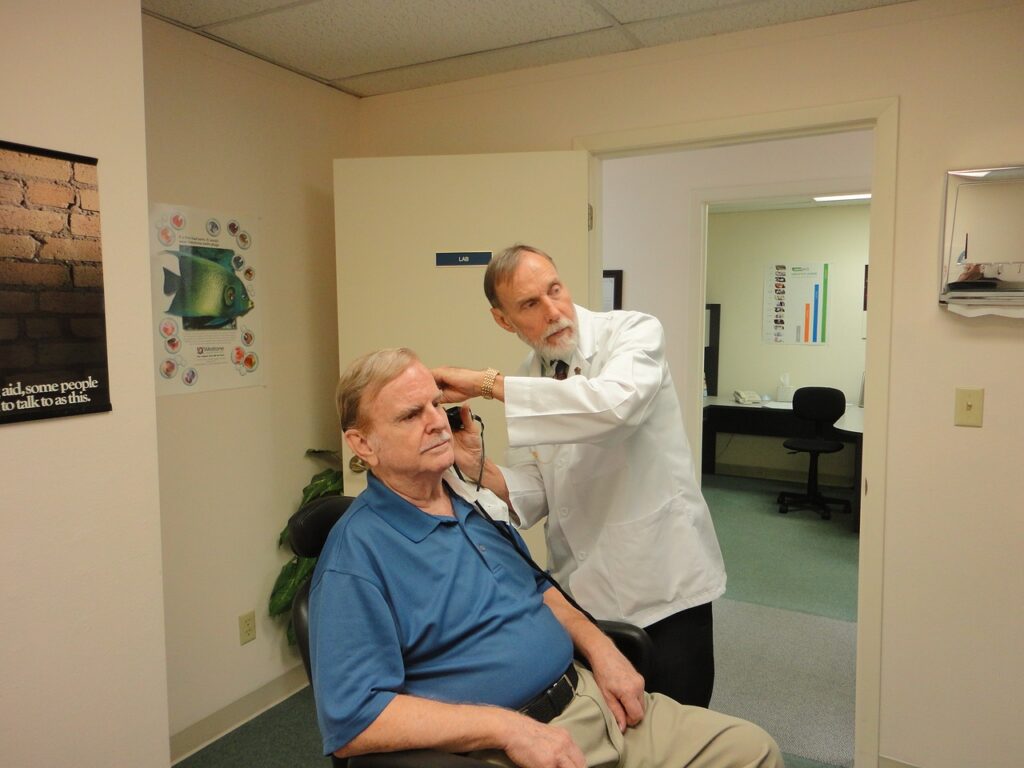
Completely in canal (CIC)
Invisible In Canal (IIC)
Rechargeable hearing Aid

Our Expertise
Id elit mauris neque, purus dui turpis gravida id viverra nunc sit risus quam ornare et massa viverra porta risus justo lectus morbi pulvinar non bibendum nisl quisque donec nunc facilisis fermentum.
01. Blood Bank & Chemistry
02. Coagulation & Cytology
Magna non in suspendisse arcu, lacus ut euismod arcu velit amet lacinia.
03. Hematology & Histology
Frequently Asked Questions
How We Hear
Although hearing is the process of sound travelling through our outer, middle and inner ear, it’s our brain that interprets what we hear.
Each part of our ear plays an essential role in transmitting sound.
- Your outer ear – this is the part you can see. It’s shaped to focus sound waves into your ear canal and onto your eardrum.
- Outer Ear – the part you can see (the pinna) and the ear canal
- Middle Ear – the eardrum and three tiny connected bones (ossicles), which are often called the hammer, anvil and stirrup
- Inner Ear – the snail-shaped cochlea and the hearing nerve, as well as semi-circular canals that help with balance
Our natural hearing depends on these parts working together. If you have a problem anywhere in this process, you may experience hearing loss.
What is Hearing Loss ?
Hearing Loss is referred to as the Loss of Hearing in one or both ears and it may stem from a problem in the inner, middle, or outer ear, or from a combination of places.
Types of Hearing Loss
Sensorineural hearing loss:
Sensorineural hearing loss is one of the types of hearing loss that occurs when the inner ear (cochlea) or hearing nerve is damaged or does not work properly. With sensorineural hearing loss, sounds are not only softer, but also difficult to understand — especially when it is noisy.
Common causes include:
- Congenital hearing loss
- Aging
- Exposure to loud noise
- Head injury
- Genetics
- Ménières disease
- Acoustic neuroma
- Meningitis
- Adverse reaction to medications.
Types of hearing loss and treatment options include:
- Hearing aids
- Cochlear implants
High-frequency hearing loss:
High-frequency hearing loss is a type of sensorineural hearing loss where it may be possible to hear some sounds with a lower pitch, but not high-frequency sounds like birds chirping.
Common causes include:
- Congenital hearing loss
- Aging
- Exposure to loud noise
- Head injury
- Genetics
- Ménières disease
- Acoustic neuroma
- Meningitis
- Adverse reaction to medications.
Treatment options include:
- Hearing aids
Conductive hearing loss:
Conductive hearing loss occurs when damage to the outer ear or middle ear blocks sound vibrations from reaching your inner ear, or cochlear. With this type of hearing loss, ears may feel plugged and speech may sound muffled, especially if there is a lot of background noise.
Common causes include:
- Malformations at birth such as Microtia and Atresia
- Syndromes such as Down, Goldenhar, and Treacher Collins
- Chronic mastoiditis or middle ear infections
- Skin growth or cyst (cholesteatoma)
- Draining ears
- Chronic ear infections
- Previous ear surgeries
- Benign tumors
Treatment options include:
- Medication
- Surgery
- Hearing aids
- Bone conduction solutions / ADHEAR
Single-sided deafness (SSD) :
Sensorineural hearing loss can occur in one or both ears. If the loss is in one ear, it is often referred to as unilateral hearing loss or single-sided deafness. This is when there is little or no hearing in one ear, but normal hearing in the other ear.
Common causes include:
- Viral infections
- Ménières disease
- Acoustic neuroma
- Adverse reaction to medications
- Head or ear injuries
- Many other unknown reasons
Treatment options include:
- CROS hearing aids
- Bone conduction solutions
Mixed hearing loss:
Mixed hearing loss refers to a combination of conductive and sensorineural hearing loss. This means there may be damage in both the outer or middle ear and the inner ear.
Common causes include any of the causes of conductive hearing loss plus any of the causes of sensorineural hearing loss.
Treatment options include:
- Medication
- Surgery
- Hearing aids
- Bone conduction solutions
Causes of Hearing Loss
Age
Age related degeneration of middle ear, inner ear and nerves that are responsible for hearing are main cause of hearing loss.
Disease
Measles, mumps or any other such type of viral infection, along with diseases like Meniere’s syndrome, tumors of the hearing nerve and meningitis are the second largest reason for hearing loss.
Drugs
There are certain drugs that are known to hamper the functionality of hair cells present in the inner ear; causing hearing loss. Quinine, aminoglycosides, aspirin are some of such drugs that can trigger hearing loss.
Infections
Otitis media is a condition that causes formation of fluid in the middle ear. This fluid hampers hearing to a great extent and can be triggered due to sore throat and inflamed tonsils
Perforation
Drastic change in the air pressure over the eardrums in comparison to the air pressure maintained in the inner ear; such as during adventure sports like paragliding or scuba diving; there are chances of perforation of eardrums, resulting in hearing loss.
Wax
Ear canal, if is blocked due to Wax buildup, then it stops sound to travel towards the inner ear and thus can also cause hearing loss. However, such type of hearing loss can be easily treated with proper medical attention and personal hygiene.
Malformation
If the outer ear or the ear canal is malformed; then it causes acute hearing loss.
Noise
Excessive noise pollution or if exposed to loud noise for a long period of time, then such exposure can cause permanent hearing loss.
The main cause of hearing loss is something we all have to come to terms with – our age. However, it can also be a result from disease, trauma or long-term exposure to damaging noise.
Can hearing Loss Be Cured By Drugs or Surgery?
At the moment, some hearing losses can be treated by either drugs or surgery. Most people with hearing difficulties find that a hearing aid recommended by a Hearing Aid Audiologist will improve their hearing.
Hearing testing is critical for discovering exactly what type of hearing loss you have, and will help determine the hearing care solution that is right for you. Hearing aids are available in many sizes, styles and technologies; there are also many alternatives to hearing aids.
Signs of Hearing Loss in Adults
While Talking to others
- You strain to hear or struggle to keep up with conversations hearing loss treatment
- You find it difficult to hear amongst background noise
- You often ask people to repeat what they’ve said
- You mishear what people say
- You agree or nod during conversations when you’re not sure what’s being said
- You withdraw from conversations because it’s too difficult to hear
- You read lips to understand what people are saying
- You feel people are mumbling when they talk
While doing everyday activities
- It’s difficult to hear on the phone
- You turn up the volume on the TV or radio louder than others in the room prefer
- You can’t hear the sounds of nature, such as rain falling or birds chirping
- You feel people are mumbling when they talk
When you’re alone
- There is a persistent ringing or buzzing sound in your ear.
- It’s hard to hear on one or both sides.
- It’s difficult to tell where sounds are coming from.
- Your voice sounds different.
- You feel pain or pressure in one or both ears.
Hearing loss in children
In some cases, a child’s hearing loss is picked up through testing soon after birth. Other times, it is more difficult to identify.
You may not know if your child has hearing loss — especially if they haven’t started talking. That’s why it’s important to understand the signs and symptoms now, so you can be ready to take action. hearing loss in children.
Some possible signs of hearing loss in an infant or toddler
- Does not react to loud sounds. hearing loss in children
- Does not seek out or detect where sound is coming from
- Has stopped babbling and experimenting with making sounds
- Still babbles but is not progressing to more understandable speech
- Doesn’t react to voices, even when being held. hearing loss in children
Possible Signs of Hearing Loss
Remember, some children with normal hearing may reach those milestones later. If you have any concerns you should speak to Audiologist or Doctor’s for needful action.
Some possible signs of hearing loss in a school-aged child
- Is easily frustrated or experiences communication breakdowns.
- Is falling behind with speech and communication skills.
- Relies on lip-reading.
- Is exhausted at the end of school from concentrating to understand speech.
What to do if you think your child has hearing loss
The first step is to see your child’s doctor and let them know about your concerns. He or she may check your child’s ears and can refer to audiologist for Hearing screening test.
- OAE
- BERA
- ASSR
&if Hearing loss exist than they may benefit from Hearing aid / Cochlear Implants followed be Speech Therapy.